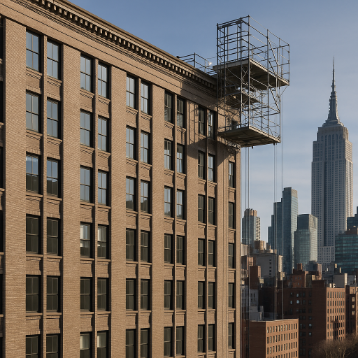
For commercial building owners in New York City, facade compliance is not a routine box to check. Under Local Law 11, now administered through the Facade Inspection and Safety Program, or FISP, exterior walls are subject to a formal inspection and reporting process that directly affects safety, operating costs, tenant experience, and liability. A clear understanding of the requirements helps owners avoid rushed repairs, filing problems, and the expensive consequences that often come from waiting too long.
What FISP means for commercial buildings in NYC
FISP is the city program that requires certain buildings to have their exterior walls and appurtenances professionally inspected on a recurring schedule. In practical terms, the rule applies to buildings that are greater than six stories in height, which means many office buildings, mixed-use properties, institutional buildings, and commercial structures fall within its scope. While the law is often discussed broadly, commercial owners face particular pressure because facade issues can affect storefront visibility, office access, sidewalk use, insurance concerns, and tenant confidence all at once.
The central purpose of FISP is public safety. New York City requires owners to monitor facades because deteriorated masonry, loose stone, failing lintels, cracked parapets, unstable railings, and other exterior hazards can create serious risks at street level. The program is not limited to cosmetic appearance. It is about identifying conditions that may become dangerous and documenting a plan to address them before they do.
Compliance begins with the right professional. Owners must retain a Qualified Exterior Wall Inspector, commonly called a QEWI, to perform the required examination and file the report with the Department of Buildings during the applicable filing window. When owners need coordinated support from inspection through repair planning, firms such as HOME | SPAR Architects can help align technical review, documentation, and construction strategy in a way that is practical for active commercial properties.
Core NYC Local Law 11 FISP requirements
Although each building presents its own conditions, the main FISP obligations are consistent. Owners are responsible for making sure the building is inspected within the proper cycle, the report is filed on time, any unsafe conditions are addressed promptly, and the facade is maintained between cycles.
| Requirement | What it means |
|---|---|
| Building eligibility | Generally applies to buildings greater than six stories in New York City. |
| Qualified inspector | The inspection and filing must be completed by a QEWI. |
| Filing cycle | Reports are filed during designated city cycles, typically on a five-year basis. |
| Condition classification | Facade conditions are reported as Safe, SWARMP, or Unsafe. |
| Owner action | Owners must correct unsafe conditions, maintain protections if required, and comply with deadlines. |
The condition categories deserve special attention because they affect what happens next.
How facade conditions are typically classified
- Safe: No issues requiring immediate repair under the current filing, though routine maintenance may still be advisable.
- SWARMP: Safe With a Repair and Maintenance Program. The condition is not immediately unsafe, but it must be corrected within the timeframe established by the rules and documented accordingly.
- Unsafe: A condition that presents a hazard. The owner must act promptly, often including public protection measures such as sidewalk sheds or barriers while repairs proceed.
Commercial owners should not underestimate the impact of a SWARMP or Unsafe finding. Even when a condition is not yet critical, delayed maintenance can expand the repair scope and create operational complications later, especially for buildings with ground-floor retail, delivery access, or heavy pedestrian traffic.
How the FISP inspection and filing process works
A successful FISP cycle starts well before a report is due. The QEWI reviews the building exterior, including facade materials, appurtenances, and visible distress patterns. Depending on the building and current requirements, the process may involve close-up examination at selected locations so the inspector can confirm conditions that are not fully visible from the ground. Owners should expect the inspection to be more than a simple visual walk-around; meaningful review often requires planning, site access coordination, and an understanding of previous repair history.
After the inspection, the QEWI prepares and files the report. That filing is not merely administrative. It becomes the official record of the building’s exterior wall condition for that cycle. If the report identifies an unsafe condition, the owner is responsible for immediate public safety measures and for correcting the issue within the required timeframe. Late filing or failure to resolve required work can trigger penalties and ongoing enforcement problems.
For many owners, the most efficient approach is to treat FISP as a year-round building management issue rather than a deadline-driven event. If a facade shows chronic water infiltration, recurring cracking, or repeated patchwork repairs, the best time to investigate is before the filing window closes. That allows time to define the real cause, secure pricing, obtain permits if needed, and schedule work with less disruption. Owners looking to understand the broader compliance process often begin with a specialist familiar with FISP and the repair coordination that usually follows an inspection report.
Common commercial building issues and how owners should prepare
Commercial buildings often carry facade vulnerabilities that differ from purely residential properties. Larger storefront openings can place extra demands on lintels and masonry above retail spaces. Signage attachments, rooftop mechanical upgrades, old sealant joints, and repeated fit-outs can introduce water pathways or localized stress. Buildings that have been altered over time may also contain a mix of original and replacement materials, which can age differently and complicate repair decisions.
Preparation is less about perfection and more about organization. Owners should gather prior FISP reports, repair records, permit history, and any notes on leaks, cracks, or recurring facade maintenance. A QEWI can work more efficiently when the building’s history is available. This is especially important for properties where current symptoms may be related to unresolved conditions from an earlier cycle.
A practical pre-inspection checklist
- Confirm whether the building falls within the current FISP cycle and filing window.
- Collect previous facade reports, repair drawings, permits, and maintenance records.
- Document known issues such as falling debris, staining, leaks, cracks, or movement around parapets and windows.
- Plan for site access, tenant notifications, and any temporary protections that may be needed.
- Set aside time for review of findings before filing deadlines create pressure.
This kind of preparation is especially useful for active commercial properties where facade work may affect loading, sidewalk usage, retail visibility, or daily occupancy. Early coordination gives owners more flexibility in sequencing repairs and communicating with tenants.
Why proactive FISP planning protects property value
The most expensive FISP cycle is usually the one handled reactively. When an owner waits until a deadline is near or until a visible problem becomes urgent, choices narrow quickly. Emergency protections, compressed bidding, limited contractor availability, and tenant disruption can all raise the overall cost of compliance. By contrast, early planning allows owners to phase work intelligently, combine related repairs, and distinguish between immediate hazards and longer-term restoration needs.
There is also a broader asset-management reason to take FISP seriously. A well-maintained facade supports the life of the building envelope, protects interiors from moisture damage, and reinforces the credibility of the property in the eyes of tenants, lenders, and prospective buyers. In commercial real estate, exterior deterioration is rarely isolated. What begins as a crack, loose component, or failed joint can become a leak, a vacancy issue, or a capital project that arrives sooner than expected.
NYC Local Law 11 is often discussed as a compliance obligation, but for commercial buildings it is also a discipline of stewardship. FISP works best when owners view inspections, reporting, and repairs as part of long-term building care rather than a periodic legal burden. With the right timing, a qualified team, and a realistic repair strategy, owners can meet FISP requirements while protecting safety, preserving value, and keeping their properties functioning with far less disruption.
For more information visit:
HOME | SPAR Architects
https://www.spararchitects.com/
Brooklyn – New York, United States
SPAR Architects commitment to maintenance of the buildings that define the illustrious skyline of New York City has founded the standard of services offered to building owners, property managers, real-estate law firms, co-op and condo boards.
